Current Research
Doctoral Project
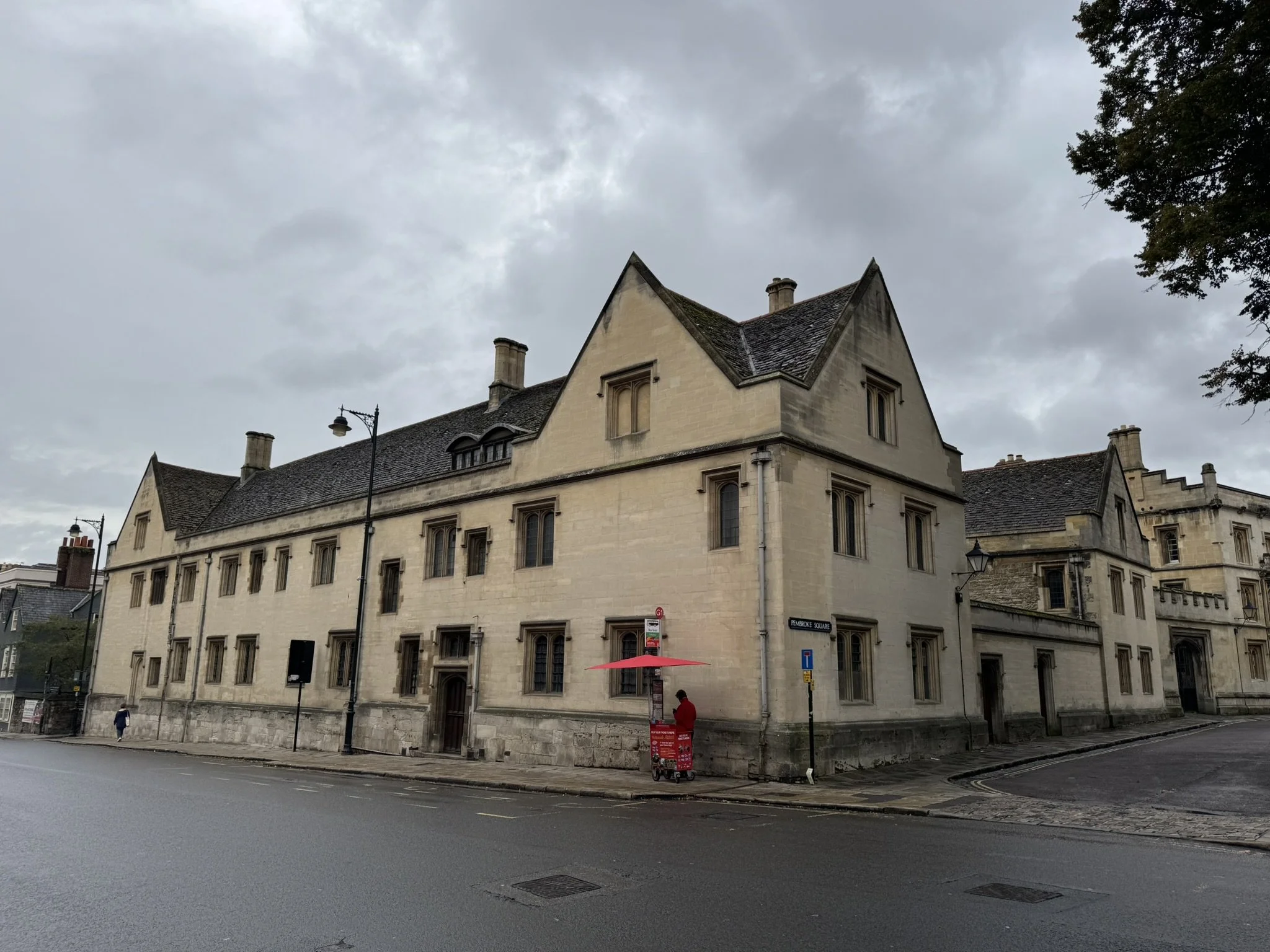
Original building of Cardinal Wolsey’s Almshouse, Oxford

Site of Bishop Gordon’s Beadhouse, Old Aberdeen
“‘For ye haue the poore alwaies with you’: Experiments in Charity in post-Reformation Oxford and Aberdeen, 1560-1640”
When the Reformation swept through England and Scotland, it led to the rapid dismantling of the Catholic infrastructure in both kingdoms, including the systems that oversaw and provided charitable works. This loss of eleemosynary infrastructure coincided with the rapid increase of poverty and the rise of the bureaucratic state across Europe. As a result, the newly Protestant regions needed to develop new methods for caring for the poor. This dissertation examines how these efforts to experiment with new forms of charitable works occurred at the local level in England and Scotland by comparing the burgh of Aberdeen and the city of Oxford. The two towns had significantly divergent outcomes in the scale and breadth of their poor relief schemes after their Reformations. Aberdeen’s experiments with charitable works were far more successful than Oxford's in terms of the number of people assisted and the amounts of money given to the poor. Notably, this overall success in Aberdeen compared to Oxford runs counter to prevailing narratives about the strengths and weaknesses of national developments in poor relief in the two kingdoms. The dissertation argues that local variables are crucial for understanding how charity developed in the new religious and political contexts of the two kingdoms. It does so by using a combination of local political and religious documents from the towns, particularly financial records that reveal official policies and how the cities fundraised and spent on charity. It begins by analyzing the towns’ frameworks that undergirded the new forms of charity, then compares their experiments across broad categories of relief. These include institutional charities, regularized relief, discipline and correction of the poor, and the provision of charity during crises. In doing so, it reveals national and local perceptions of the poor and the poor’s identities as individuals with agency and unique experiences.

Compendium moralium notabilium Project
The Compendium moralium notabilium project, headed by Dr Chris Nighman of Wilfred Laurier University, seeks to create a digital database of Geremia da Montagnone's humanist florilegium for intertextual searches between various manuscripts.
Medieval Scottish Charters
I am currently a part of a team developing the digital archive for the University of Guelph Archives and Special Collections’ medieval Scottish Charter collection. This digital archive is intended to make the charters in the collection accessible to researchers, students and genealogists around the world and highlight the world-class collection of Scottish primary sources held by the university.
